Fall Roof Inspection Checklist: What Every Dallas Homeowner Needs to Know in 2025
Your roof just survived another brutal Texas summer—here's how to make sure it's ready for what comes next
By Under One Roof Home and Commercial Services
Award-winning roofing contractors serving the Dallas-Fort Worth metroplex since 2010
Published: September 11, 2025 | Updated: September 11, 2025
September in Dallas means one thing: your roof has been through hell. After months of 100+ degree days, afternoon thunderstorms, and the occasional hail scare, fall presents the perfect window to assess what damage summer inflicted and prepare for whatever winter decides to throw at us.
As someone who's spent fifteen years in the Dallas roofing industry, I've seen too many homeowners skip this annual ritual, only to discover leaks during the first norther or face emergency repairs when contractors are busiest and most expensive. A systematic fall inspection can save you thousands while extending your roof's life by years.
Why Dallas Roofs Need Special Attention
The DFW metroplex faces unique roofing challenges that set us apart from most of the country. Our location puts us in what's known as "Hail Alley," where severe weather patterns create perfect conditions for damaging storms. We experience both punishing heat that degrades materials and severe weather that tests structural integrity.
Texas consistently ranks among the top states for hail damage claims according to insurance industry reports. From 2012 to 2021, Texas experienced 1,243 hailstorms resulting in $6.5 billion in property damage, securing the state's position as #1 for highest recorded hail losses. The combination of our geographic location, flat topography, and temperature differentials creates conditions that are particularly hard on roofing systems.
Areas We Serve Throughout DFW:
The Real Cost of Skipping Inspections
Roofing failures rarely happen overnight. That small leak that appears during the first hard rain of October typically started as granule loss in June, progressed to cracked shingles in August, and finally broke through during autumn's temperature swings.
Consider this common scenario: a homeowner assumes their ten-year-old roof is fine because it looks good from the street. Then an unexpected ice storm hits, and suddenly water is dripping into the kitchen. What could have been a minor repair becomes major damage to both roof and interior.
Your Step-by-Step Fall Inspection Guide
Start with the Ground-Level Assessment
Safety First:
Before climbing any ladders, grab binoculars and walk your property's perimeter. You can spot most potential issues from ground level if you know what to look for.
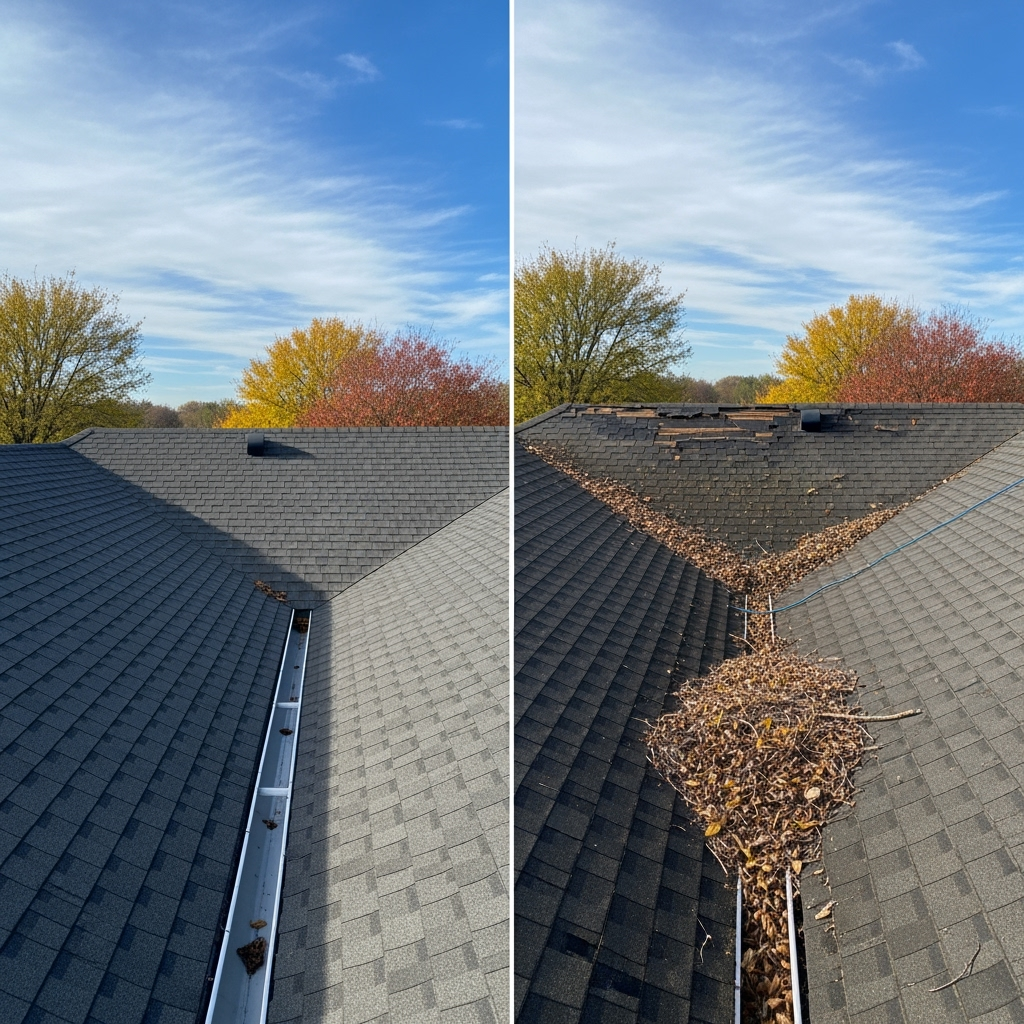
Check your gutters first. Those leaf-clogged gutters aren't just an aesthetic problem—they're early warning systems. Excessive granule accumulation means your shingles are deteriorating. In Dallas's expansive clay soil, backed-up gutters can also create foundation issues that cost far more than roof repairs.
Scan for missing or damaged shingles. Missing shingles are common after our summer storm season, especially on homes in high-wind areas. Look for shingles that appear lifted, cracked, or have lost their uniform color. That one curled shingle edge might seem minor, but it's an invitation for wind-driven rain.
Examine flashing around penetrations. This includes chimneys, vents, skylights, and satellite dishes. Flashing failures account for a significant percentage of roof leaks. The intense UV exposure we get in Dallas breaks down sealants faster than in most climates.
When to Actually Get on the Roof
⚠️ Safety Warning:
Unless you're comfortable with heights and have proper safety equipment, stay off your roof. But if you're determined to get up there, wait for dry conditions and bring a buddy.
Check shingle integrity up close. Run your hand gently over shingles to feel for loose granules or soft spots. Quality shingles should feel firm and slightly rough. If they feel smooth or you see bare spots where granules have worn away, replacement might be closer than you think.
Inspect attic ventilation. Poor ventilation kills roofs in Dallas faster than almost anything else. Your attic should have intake vents under the eaves and exhaust vents at the ridge. If you can't feel air movement on a breezy day, you've got a problem that's costing you money on energy bills and shortening your roof's life.
The Interior Investigation
Some of the most telling signs of roof problems show up inside your home. Head to your attic with a flashlight during daylight hours—any light penetrating from outside indicates holes that will soon become leaks.
Look for water stains on rafters and decking. Fresh stains appear dark and may still feel damp. Older stains show up as dark rings or discolored wood. Even old stains matter because they indicate vulnerable areas that could fail again.
Check insulation condition. Wet insulation doesn't just lose effectiveness—it becomes a breeding ground for mold and can rot the structural members it touches. In Dallas's humidity, this process happens faster than in drier climates.
Need a professional inspection? See our full range of roofing services to keep your home protected year-round.
Specific Challenges for Dallas-Area Properties
Hail Damage Recognition
Hail damage isn't always obvious immediately after a storm. Professional adjusters look for specific patterns that homeowners often miss:
- Granule loss in consistent patterns across multiple shingles
- Exposed mat or felt where granules have been completely stripped away
- Cracked or split shingles that may not be visible from ground level
- Damaged gutters and downspouts which often indicate roof damage too
Many homeowners assume their roofs are fine because they don't see obvious damage immediately after a storm. Months later, those same homeowners start experiencing leaks as the compromised shingles fail under normal weather stress.
Heat-Related Deterioration
Dallas summers are particularly brutal on asphalt shingles, which are standard on most homes in our area. Sustained high temperatures cause shingles to become brittle and lose protective oils. This process accelerates after year ten of a shingle's life.
Properties in neighborhoods with mature trees that provide shade typically see longer shingle life compared to newer developments where shade is limited.
Wind Uplift Issues
The combination of flat topography and temperature differentials makes DFW particularly susceptible to high winds. Homes in elevated areas face additional challenges from wind shear effects.
Modern building codes require enhanced wind resistance, but homes built before the mid-1990s often lack adequate fastening for today's weather patterns. If your home predates these requirements, pay special attention to edge shingles and those around roof penetrations.
Commercial and Multi-Unit Considerations
Property managers and commercial building owners face additional complexities during fall inspections. Flat or low-slope roofs common on retail and office buildings require different inspection techniques and more frequent attention.
Focus on membrane integrity rather than individual shingles. Look for bubbling, cracking, or separation at seams. Commercial roofs in Dallas typically need professional inspection more frequently due to our extreme temperature variations.
Check drainage systems religiously. Commercial buildings often have interior drains that can't be seen from ground level. Clogged drains create standing water that accelerates membrane failure.
Schedule inspections during business hours when possible. This allows you to check for interior signs of water infiltration while staff are present to point out any concerns they've noticed.
Technology and Modern Inspection Methods
Drone technology has changed roof inspections, especially for taller buildings or homes where ladder access is dangerous. Many local roofing contractors now offer drone inspections that provide detailed photography of your entire roof surface, typically costing much less than emergency repairs.
Thermal imaging cameras can identify problem areas not visible to the naked eye. These tools detect temperature variations that indicate missing insulation, air leaks, or moisture intrusion. While not necessary for routine homeowner inspections, thermal imaging becomes valuable for older homes or those with suspected problems.
Creating a Maintenance Schedule That Works
The best roof inspection happens on a schedule, not just when problems become obvious. Based on local climate patterns and industry experience, here's what works:
- Bi-annual inspections: Spring and fall, timed with gutter cleaning
- Post-storm checks: Within 48 hours of any severe weather
- Professional inspections: Every three years for newer roofs, annually for older systems
- Documentation: Photos dated and stored digitally for insurance and maintenance records
The Economics of Preventive Care
Preventive maintenance costs significantly less than emergency repairs. Minor repairs caught early typically run hundreds of dollars rather than thousands. Emergency repairs during peak season (storm season) cost substantially more than scheduled maintenance.
A homeowner who spends money on professional maintenance in fall, replacing damaged shingles and resealing flashing, often avoids major problems when severe weather hits. Those inspection photos and maintenance records become valuable if you need to file an insurance claim.
Insurance implications matter too. Many policies require proof of regular maintenance to honor claims. According to Policygenius, wind and hail damage made up 34.3% of property damage claims nationwide in 2019. Documentation becomes your protection when filing claims after severe weather.
Working with Professionals
Not all roofing contractors understand our local challenges equally well. When hiring professionals, look for those with specific Dallas-area experience. They should understand our soil conditions, local weather patterns, and building code requirements.
Ask potential contractors about their experience with insurance claims, particularly hail damage. Companies that work regularly with adjusters understand documentation requirements and can help you navigate the claims process more effectively.
Red Flags That Demand Immediate Attention
Some inspection findings require immediate professional intervention:
- Multiple missing shingles in the same area
- Sagging roof lines indicating structural issues
- Large water stains or active leaks
- Significant granule loss across visible shingle surfaces
- Damaged flashing around chimneys or penetrations
- Gutters pulling away from the fascia board
These issues won't resolve themselves and typically worsen rapidly once started. The cost of delayed action almost always exceeds the cost of immediate repair.
Beyond Basic Maintenance: Value-Added Improvements
Fall inspections present opportunities for improvements that increase property value while solving problems. Consider these upgrades during your inspection process:
Energy-efficient shingles can reduce cooling costs in our climate while potentially qualifying for utility rebates. Several local utility companies offer incentives for cool-roof installations.
Improved ventilation systems pay for themselves through lower energy bills and extended roof life. Ridge vents combined with soffit vents create natural air circulation that keeps attics cooler and prevents ice dams during winter weather events.
Impact-resistant shingles often qualify for homeowners insurance discounts while providing better protection against hail storms. The upfront cost premium typically pays for itself through insurance savings.
Planning for the Future
Your fall inspection should include thinking about long-term roof replacement timing. Most asphalt shingle roofs in Dallas last 18-25 years, depending on installation quality and maintenance. If your roof is approaching fifteen years old, start planning financially for replacement and researching contractors before you need emergency service.
Consider seasonal timing for major work. Fall and winter typically offer better contractor availability and pricing compared to spring and summer when storm damage creates high demand. Many experienced contractors offer discounts for work scheduled during their slower months.
Making Your Investment Count
A well-maintained roof represents one of your property's most important protective systems. According to recent studies, homes with well-maintained roofs can command as much as a 15% premium over similar properties with neglected roofing systems. In Dallas's challenging climate, systematic inspection and maintenance can extend roof life significantly while preventing costly secondary damage to interior spaces.
The key lies in treating your roof as an active system requiring regular attention rather than a passive component you ignore until problems force action. This fall, take the time to thoroughly assess your roof's condition. Document what you find, address problems promptly, and establish a maintenance routine that protects your investment year-round.
Your roof weathered another Texas summer—now make sure it's ready for whatever comes next. The time you spend on inspection this fall could save you thousands in emergency repairs and extend your roof's life by years. The question isn't whether you can afford to inspect your roof; it's whether you can afford not to.
Continue Reading: More Expert Roofing Insights
For more expert roofing insights and North Texas-specific guidance, explore our complete blog collection with tips on timing, costs, maintenance strategies, and insurance considerations:
Ready to Schedule Your Fall Roof Inspection?
Don't wait for problems to find you. Our certified roofing professionals provide comprehensive inspections throughout the Dallas-Fort Worth metroplex.
Serving Dallas, Plano, Irving, Celina, and surrounding DFW communities
Under One Roof Home and Commercial Services
📞 Phone: (214) 649-5984
🌐 Website: www.underoneroof-tx.com
📧 Email: max@underoneroof-tx.com
📍 Address: 13135 Rosser Rd, Farmers Branch, TX 75244
GAF Certified • Insured • Local Dallas Experts